Best Dry Fruits to Eat in Winter in Pakistan — and How Much Is Actually Enough
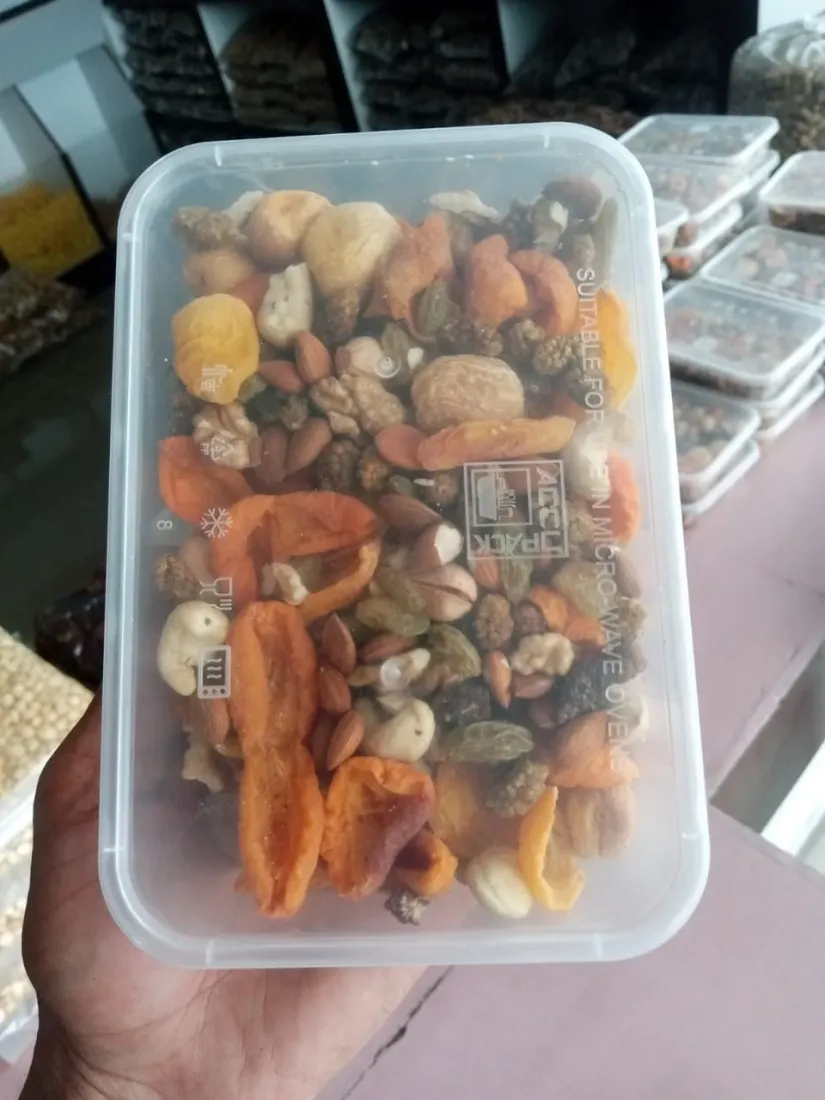
Sardiyon mein dry fruits are a Pakistani habit older than any nutrition label. Here is which ones earn their place in winter, what each actually does, and the portion almost everyone gets wrong.
The portion first, because it is the part people miss
A sensible daily serving of dry fruits is roughly 20 to 30 grams — a small handful. Not a bowl in front of the heater, not a plate passed around all evening. Dry fruits are concentrated: the water is gone, so the calories, sugars and fats are packed tight. A handful a day is a genuinely good habit. Four handfuls a day is a different thing entirely.
Six that are worth it in winter
Almonds (badam)
Pakistan's most-eaten dry fruit, and deservedly so — vitamin E, protein, magnesium and healthy fat. The soft-shelled kaghazi variety is the one worth paying for, because thin-shell almonds are sweeter and less bitter than hard commodity stock. Soak them overnight if they sit heavy on your stomach.
Walnuts (akhrot)
The best plant source of omega-3 ALA on the winter tray, plus polyphenols that work as antioxidants. Walnuts in the shell keep far longer than shelled halves, because the shell protects the oil from air and light. Buy them with the shell if you are buying for the season.
More on Gilgit-Baltistan walnuts →
Dried apricots (khubani)
Fibre, potassium and beta-carotene. The important distinction is sulphur: bright orange dried apricots have usually been treated with sulphur dioxide to keep the colour. Naturally sun-dried apricots go brown — that darkening is the honest version.
Chilgoza (pine nuts)
The most expensive dry fruit in Pakistan, and the most seasonal. Every kernel is extracted by hand from wild pine cones, which is the whole reason for the price. Rich, buttery, warming — and best bought in season and kept in the fridge, because the oils turn quickly.
Why chilgoza costs what it costs →
Dried figs (anjeer)
The tray's best answer to winter digestion — high in fibre, calcium and iron. Two or three is a serving. Soaking them overnight makes them far easier on the stomach.
Apricot kernels (khubani giri)
The almond-shaped seed inside the apricot stone, eaten by the handful across the apricot valleys. One rule matters and we will not soften it: sweet kernels are food, bitter kernels are not. If a kernel tastes sharply bitter, spit it out.
Sweet versus bitter kernels, explained →
Do dry fruits actually "keep you warm"?
Partly. There is no ingredient that heats you up on contact. What is real is that dense, fat- and protein-rich food takes more energy to digest and releases that energy slowly, so a handful in the evening genuinely helps you feel steadier through a cold night. The tradition is not wrong; the mechanism is just more ordinary than the folklore.
How to buy so you are not throwing money away
- Buy in season. The northern harvest comes down in autumn. Stock bought in spring has usually spent months in a warehouse.
- Smell before you commit. Rancid oil smells sharp, like old paint. That is the single most common fault in cheap dry fruit and no amount of roasting hides it.
- Prefer the shell. For walnuts, almonds and chilgoza, the shell is free packaging that keeps the oil fresh.
- Store cool and dark. An airtight jar away from the stove and the window. The fridge for anything high in oil.
Browse dry fruits from Gilgit-Baltistan →
Quick answers
How many dry fruits should I eat per day in winter? About 20–30 grams, which is one small handful. They are concentrated food, so more is not better.
Which dry fruit is best for cold weather? There is no single best. Walnuts for omega-3, almonds for vitamin E, apricots for fibre and potassium, chilgoza for dense energy — a mixed handful beats any one of them.
Should I soak dry fruits before eating? Soaking almonds, figs and apricot kernels overnight softens them and makes them easier to digest. It is optional, not essential.
Why are some dried apricots orange and some brown? Bright orange usually means sulphur treatment to preserve colour. Brown means naturally sun-dried.