5 Gilgit-Baltistan Superfoods Most of Pakistan Has Never Tried
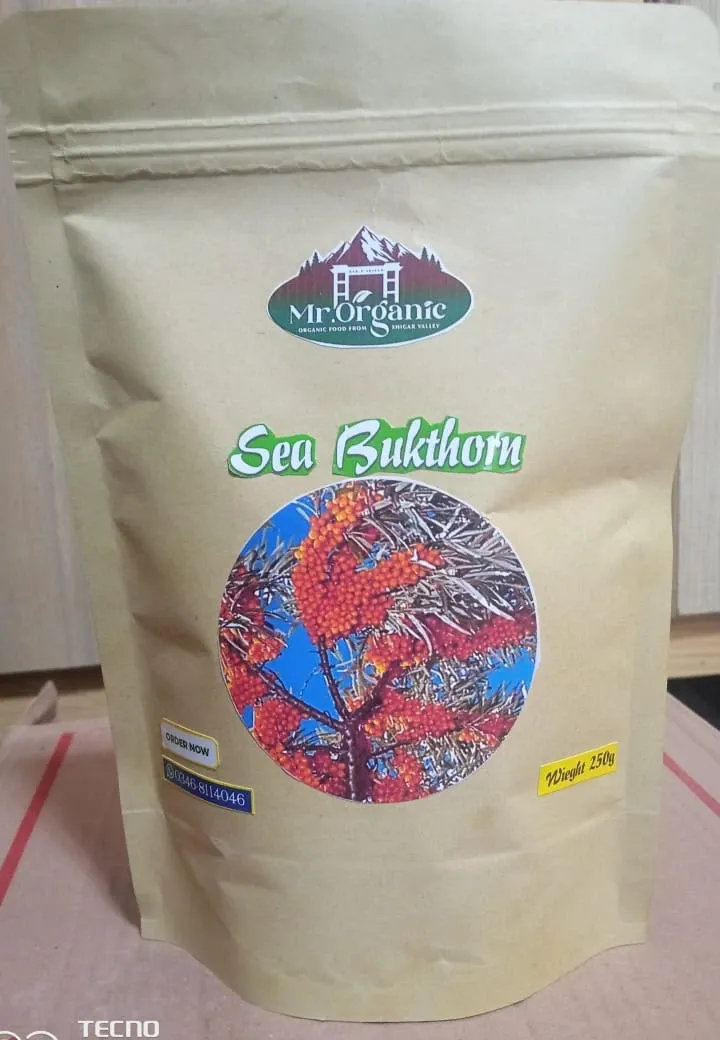
Sea buckthorn, tumburu, buckwheat, kilao and walnut oil are everyday food in the northern valleys and almost unknown in the rest of Pakistan. Here is what each one is, what it does, and how to actually use it.
1. Sea buckthorn (burus)
Thorny silver-leaved bushes grow wild along the river beds of Gilgit-Baltistan and Chitral, and in autumn the branches turn solid orange with berries. Locally it is burus; in Hunza's Burushaski it is chash e guno.
It is one of the highest natural sources of vitamin C in the world — reported at up to ten times that of oranges by weight — and one of very few plants that carry omega 7 alongside omega 3, 6 and 9. Nobody plants it and nobody sprays it; the harvest is done by hand, around long thorns, in a short autumn window.
How to use it: steep a teaspoon of dried berries in hot water for five minutes and sweeten with honey. It is sharply tart on its own, so start small.
The full sea buckthorn guide →
2. Tumburu (tumuro) herbal tea
A wild aromatic herb gathered from high mountain slopes and brewed as a warm, citrusy tea. It is naturally caffeine-free, which is why it is drunk in the evening across the region, and it is traditionally taken after heavy meals to settle the stomach.
How to use it: a small pinch simmered in water for three to five minutes, strained, with honey if you like. One or two cups a day.
3. Buckwheat (phaphar)
Despite the name it is not a wheat and contains no gluten at all — it is a seed. In Gilgit-Baltistan it is ground into flour for pancakes and flatbread and has been a mountain staple for generations. It is rich in rutin, an antioxidant associated with circulation, and carries more complete protein than most grains.
How to use it: as flour for rotis and pancakes, or as whole grain simmered two parts water to one part grain for about fifteen minutes.
4. Kilao
The one on this list you will not find a health claim for, because it is a sweet. Walnut kernels are threaded on a string and dipped repeatedly in thickened mulberry juice until they build up a dark, chewy coat. It is Gilgit-Baltistan's own energy bar, made long before anyone used that phrase, and it is what gets packed for a long walk in winter.
How to use it: slice it across the string. A thumb-length piece is a serving.
5. Walnut oil (akhrot ka tel)
Cold-pressed from the walnuts that grow in every village, and unusual because it works in three places at once: drizzled on food, massaged into the scalp, and rubbed into dry winter skin. It is one of the richest plant sources of omega-3 ALA.
One rule: never cook with it. Heat destroys the omega-3 and turns the taste bitter. It is a finishing oil — added after the pan, at the table.
More on cold-pressed walnut oil →
Why these stayed local
None of these five travel well through a conventional supply chain. Sea buckthorn is wild-harvested in a two-week window. Kilao is made by hand in village kitchens. Tumburu is gathered, not farmed. They were never going to end up in a national distribution network — which is precisely why they are worth ordering directly from the people who make them.
Browse organics from Gilgit-Baltistan →
Quick answers
What is burus? Burus is the local name for sea buckthorn, a wild orange berry from Gilgit-Baltistan that is exceptionally high in vitamin C and one of the few plant sources of omega 7.
Is buckwheat gluten-free? Yes. Buckwheat is a seed, not a wheat, and contains no gluten.
What is kilao made of? Walnut kernels threaded on string and coated in thickened mulberry juice — a traditional Gilgit-Baltistan sweet and winter energy food.
Can I cook with walnut oil? No. It has a low smoke point and heat destroys its omega-3 content. Use it cold, after cooking.