Gifts from the Mountains: What to Give at a Pakistani Wedding, Eid or Corporate Box
Everyone receives the same gift hamper. Here is what to send instead — handmade and edible gifts from Gilgit-Baltistan, sorted by occasion and by what they actually cost to do properly.
The problem with the standard hamper
Curated hampers have largely replaced cash at Pakistani weddings, and the result is that guests now receive six versions of the same box. The gift that gets remembered is not the most expensive one; it is the one with a story the recipient can repeat. That is the entire case for giving something made by hand in a named valley rather than something assembled in a warehouse.
For a wedding
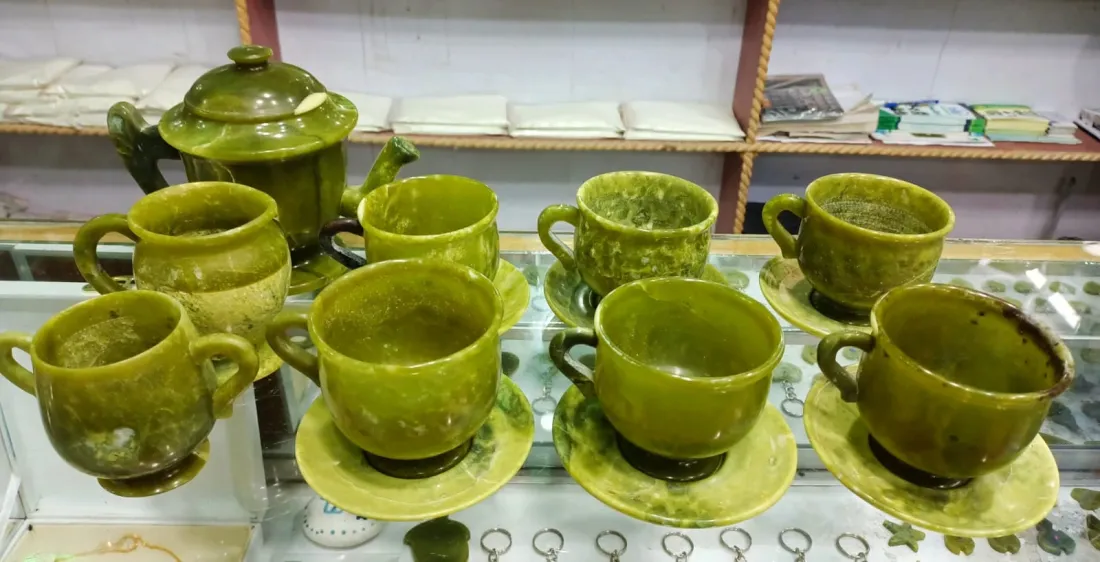
Zahr Mohra stoneware
A soft green-grey serpentine stone quarried in Baltistan, hand-turned on a lathe into cups, teapots and bowls. No two pieces are alike because every one is cut from a single block. It holds heat far longer than ceramic, it has no glaze or coating, and looked after properly it outlives the couple's first house.
A tea set is the natural wedding gift here — it is used, it is displayed, and it comes with something to say about it.
What Zahr Mohra is, and how it is carved →
A chilgoza box
For a gift that should read as expensive without a label announcing it, chilgoza does the work. It is the most expensive dry fruit in Pakistan, it is unmistakably seasonal, and most people receive it rarely enough to be pleased.
Why chilgoza costs what it costs →
For Eid
Eid gifting rewards things that get shared in the room rather than put away.
- A mixed dry fruit tray — kaghazi almonds, walnuts in the shell, sun-dried apricots and dried figs. Buy in autumn for the best of the northern harvest.
- Raw honey — a jar of wild Sidr honey from a named beekeeper says considerably more than a supermarket brand.
- Kilao — walnuts coated in mulberry juice, the region's traditional sweet. Almost nobody outside the north has tried it, which is exactly the point.
For a corporate box
Corporate gifting has one requirement retail gifting does not: it must survive being sent to fifty people you do not know personally. That rules out anything with strong dietary assumptions and anything fragile in bulk.
What works:
- Dry fruit selections — universally acceptable, long shelf life, scales cleanly.
- Honey and herbal tea pairs — light to ship, and tumburu tea is caffeine-free, so it suits everyone.
- One handmade object per box — a single carved stone cup lifts an otherwise ordinary hamper more than doubling the dry fruit does.
For volume orders, order in autumn. The northern harvest comes down between September and November and both quality and availability are at their best.
What to check before you buy any of it
- Ask where it came from. A valley and a maker's name, not just "imported from the north".
- Smell the dry fruit. Rancid oil smells sharp, like old paint. It is the most common fault in bulk gift stock.
- Check that honey is allowed to crystallise. Honey that never granulates has usually been heated hard.
- Order early for handmade pieces. A carved stone teapot takes days to make, not minutes, and there is no warehouse behind it.
Every product on SkarduApp comes from a named maker in Gilgit-Baltistan. Meet the makers → or browse handmade pieces →
Quick answers
What is a good traditional Pakistani wedding gift? Something used and kept — hand-carved Zahr Mohra stoneware, a tea set, or a seasonal chilgoza box carries more weight than a generic hamper.
What should I put in a corporate gift box? Dry fruit selections, honey and caffeine-free herbal tea travel well and suit almost everyone. Add one handmade object to lift the box.
When should I order gifts from Gilgit-Baltistan? Autumn, between September and November, when the northern harvest arrives and handmade stock is at its best.